Thursday, 16 June 2022

Nev Cole Way, Stage 3.

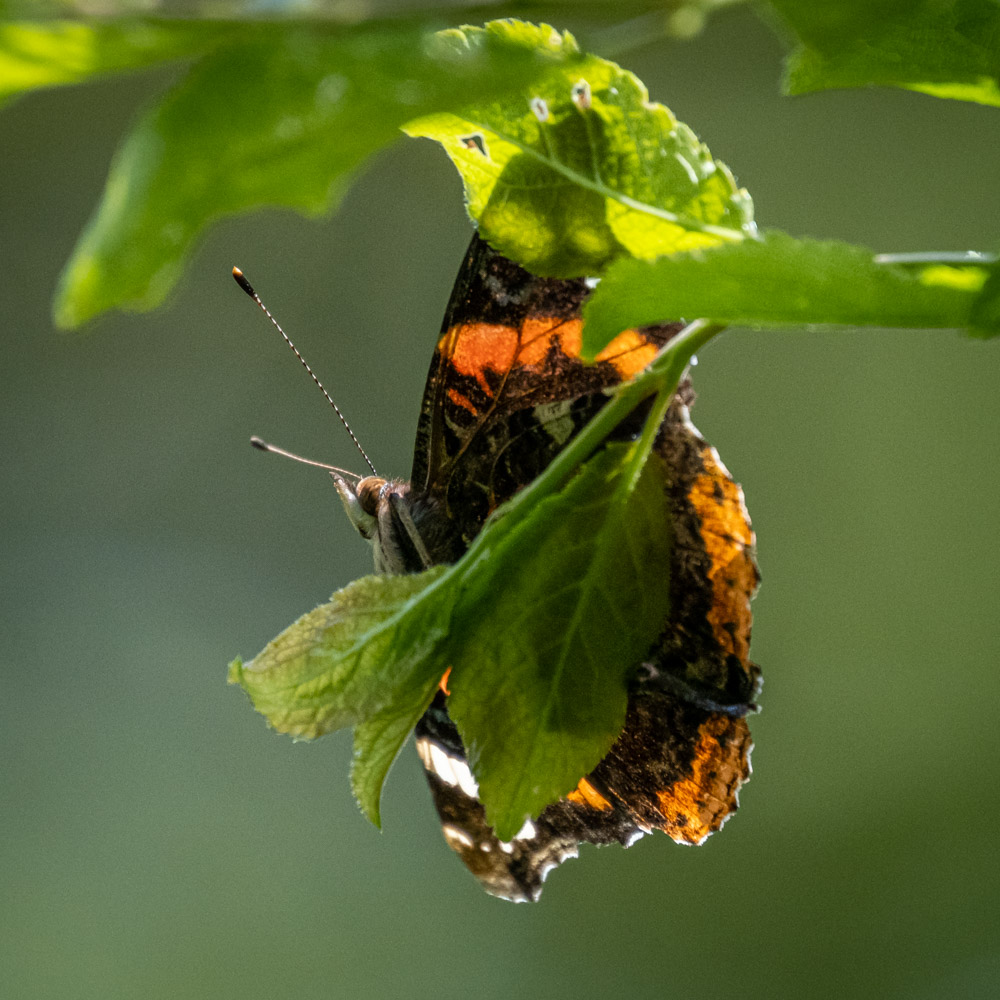
 Yesterday saw us embarking on the third stage of our Nev Cole Way walk, today's stage taking us from the Sloop in Barton to New Holland 4.5 miles along the Humber.  This turned out to be another excellent with good views and plenty of interest.  Sadly, although very warm at 24C, it was overcast and views were not crisp.  It was relatively quiet on the bird front, although I did get good views of a cuckoo fly past and reed warblers were active, churning out their rattling songs and little grebes were call on the lakes.  Buterflies were very active with very large numbers of small tortoiseshell along with occasional red admirals and whites of varying species.  Although not the best time of year for birds now this walk would be an excellent birding walk from Autumn through Winter and into Spring.  I hadn't realised how many lakes there were inland of the river, all presumably old brick pits.  I was amazed as we approached Barrow Haven to see the superstructure of a ship loom above the trees, discovering a few minutes later that it was berthed/grounded in the haven by the timeber yard.  A short while later we arrived at New Holland and I enjoyed conjecturing where the paddle steamers over to Hull had berthed and how people got to them from the station.  I only used it once or twice many years ago so had no recollection.  Back at the car it was time to repair to the excellent Sloop for well-deserved pint of Bateman's Gold and our evening meal.

To view large, please click on an image.


Wednesday, 15 June 2022

The Strawberry Supermoon

 We were just about to call it a night and return home for a nightcap when Jane saw a sliver of red appearing above the trees on the Fitties.  Three of us had gone down to the promenade by Buck Beck to try and obtain better views of June's full moon: the strawberry supermoon, one of only three supermoons this year.  A supermoon is a full or new moon that coincides with the closest the moon comes to the Earth's orbit and so it appears larger than normal.  When we arrived, there were several other moon watchers along with a fleet of campervans that appeared to be overnighting (illegally?).  Although it was a beautiful evening with moon rise sceduled for 1017, there was a bank of cloud masking the horizon.  Things were not looking good until we spotted it as we were on the point of giving up.  It did seem large and was an amazing deep red.  However, as this low in the sky, it was a challenge to photograph as it was not reflecting much light.  I cound only manage a 1 sec exposure so getting the image critically sharp was nigh on impossible as the moon moves surprisingly fast.  More or less immediately on showing its full disc, the moon proceeded to disappear behind the bank of cloud.  Still, it was an amazing experience and the next supermoon is in July, the Buck Moon on 13th.

To view large, please click on an image.


Monday, 13 June 2022

Orchids, Butterflies and Close Encounter with a Fox.

 Aware that I wasn't alone, I looked up to see a fox only yards away watching me inquisitively but with caution.  It had found a sunny spot in a sea buckthorn clearing and was indulging in a spot of sunbathing.  It was quite happy to watch me and didn't seem to see me as a threat until I moved slightly to try and get a better view when it retreated into the undergrowth and continued to study me from the security of the thorns.  It was an absolute joy to experience this close encounter.

I had decided to have a walk through the dunes at Cleethorpes to check out the orchids and to do a butterfly and bird count.  I had been full of doom and gloom when I was last here earlier in the year when the scene was one of devastation.  Scrub clearance, as part of Lincolnshire's Dynamic Dunscape Project, had been undertaken leaving the area not looking its best.  However my despondency had been totally misplaced as the dunes were looking stunning and the orchids perhpaps better than ever.  There are two main types of orchid here: common spotted and southern marsh and also their hybrids.  As if the identification of some of our orchids was not difficult enough, some species have a habit of cross-pollinating with each other to produce hybrids.  These hybrids are often fertile and can continue to cross not only with each other, but also back cross with either of the parents.  The result is a 'hybrid swarm', where a population at a single site can show more or less a full spectrum of intermediates from one original parent to the other.  Marsh and spotted orchids seem most prone to this behaviour and their hybrids are usually a tall and stately plant with a large number of flowers in the spike.  This happens here in Cleethorpes Dunes but also at Saltfleetby/Theddlethorpe NNR.  A challenge to identify they may be, but in Cleethorpes Dunes they make a tremendous display.

As well as my encounter with the fox and the enjoyment of the orchids I found 25 bird species and 8 butterfly species so, an excellent afternoon.

To view large, Please click on an image

Cleethorpes Dunes
Cleethorpes Dunes
Common Spotted orchid/Southern Marsh hybrid
Fox
Fox
Fox
Meadow Brown
Small Tortoiseshell
Small Tortoiseshell

Saturday, 11 June 2022

Roe Deer on The Horsefield and a New For Year Butterfly.

 Looking up from photographing a large skipper, the roe deer buck was only a matter of yards away regarding me curiously.  For a while we stood and watched each other before it wandered away towards the allotments in a very relaxed way.  I was able to take photographs of it merging into the long grass as it stared at me, and then a few more as it walked away.  What an absolute privilege.  I am used to seeing roe deer in the woodland burial ground but this is the first I have seen out in the field.  I often see their slots around the woodland burial ground, especially in winter when the ground is soft and have seen individuals and one buck with two does together.  A few weeks ago I had close views of a buck in the main cemetery but it had an injured eye; I wondered if it had been fighting.

Roe are slender, medium sized deer and have no tail.  Mainly brown they turn reddish in summer.  They are our most common deer and tend to be solitary in summer, but form small groups in winter which is when I have seen up to three at a time.  The males have short antlers which begin to grow in November.  They shed the velvety covering in spring and by summer are ready for the rutting season.  After mating, they shed their antlers in October and begin to grow a new set. 

 Roe deer live in areas of mixed countryside that includes woodland, farmland, grassland and heathland.  Food comprises buds, leaves, ferns and grasses.

I had followed my usual route into the cemetery and out to Gooseman's field crossing the drain first.  I search both sides of a large bramble hedge as I arrive; it is a good location for both birds and butterflies.  After searching both sides of the middle hedge I make way way behind the allotments to the cemetery for a lap around the woodland burial ground and home.  The Horsefield or Gooseman's Field is best for meadow and grassland butterfly species while the burial ground is better for woodland ones.  Where the horses have been grazed on the Horsefield, both yellow rattle, essential for a wild-flower meadow, and birdsfoot trefoil proliferate.  Birdsfoot trefoil is the food plant for the larvae of common blue butterflies and I feel that they ought to be more common here than they are.  Surprisingly, in late summer and early Autumn, the woodland burial ground is good for common darter and occasionally large dragonflies.

To view large, please click on an image.
Roe Deer buck
Roe Deer buck
Roe Deer buck
Large Skipper
Large Skipper
Large Skipper
Large Skipper
Large Skipper
Red Admiral
Red Admiral
Red Admiral
Small Tortoiseshell
Speckled Wood

Birdsfoot Trefoil
Birdsfoot Trefoil on The Horsefield (Gooseman's)
Gooseman's Field
Gooseman's Field